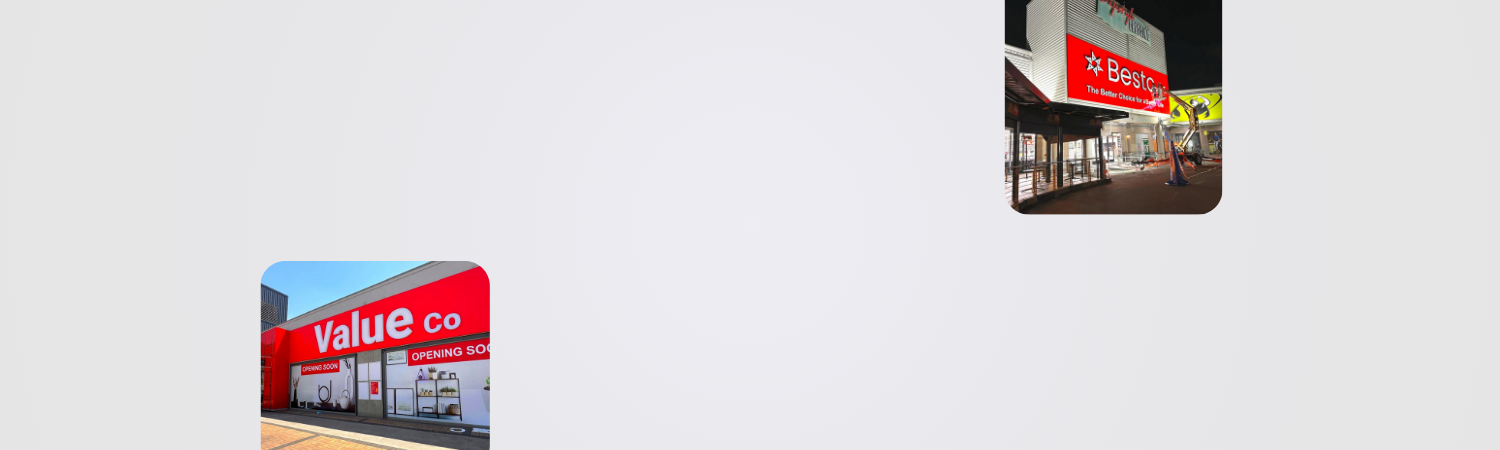

Guide signs are a type of signage designed to help people navigate spaces efficiently. They provide clear directions, location information, and orientation guidance in environments where multiple routes, rooms, or buildings exist. You’ll often find guide signs in malls, hospitals, office parks, campuses, airports, and large retail spaces.
Common guide sign examples include:
- Directional arrows pointing to entrances, exits, or facilities
- Floor directories showing store or department locations
- Wall-mounted maps and site plans
- Parking and level indicators
- Digital wayfinding screens
Their main role is simple: help people get from point A to point B without confusion.
What Is Wayfinding Signage?

Wayfinding signage is the system behind guide signs. It’s a carefully planned combination of signs, placement, design, and messaging that works together to create an intuitive navigation experience. Good wayfinding considers how people move, think, and make decisions in a space.
A well-designed wayfinding signage system:
- Reduces stress and confusion
- Improves foot traffic flow
- Enhances safety and accessibility
- Reflects the brand’s professionalism
Why Wayfinding Improves Customer Experience

When visitors can easily find where they’re going, their overall experience improves instantly. Clear guide signs save time, reduce frustration, and make spaces feel welcoming rather than overwhelming.
For businesses and facilities, effective wayfinding:
- Keeps visitors moving smoothly through the space
- Reduces reliance on staff for directions
- Creates a positive first impression
- Improves accessibility for all users
- Enhances safety during emergencies
In busy environments like hospitals and malls, wayfinding signage isn’t a luxury—it’s essential.
The Purpose of a Signage System

A signage system ensures consistency, clarity, and visibility across an entire site. Instead of random or mismatched signs, a system uses uniform colours, fonts, symbols, and materials to guide people naturally through a space.
The purpose of a signage system is to:
- Communicate information clearly
- Guide movement and behaviour
- Support branding and identity
- Ensure compliance with safety regulations
Custom Wayfinding Solutions by Millennium Signs
At Millennium Signs, we design and manufacture custom guide signs and directional signage systems tailored to your environment. From concept and design to manufacturing and professional installation, we ensure your signage is functional, durable, and visually aligned with your brand.
Whether you’re managing a hospital, retail centre, campus, or commercial building, our expertly crafted wayfinding signage helps people move with confidence—and leaves a strong, professional impression.