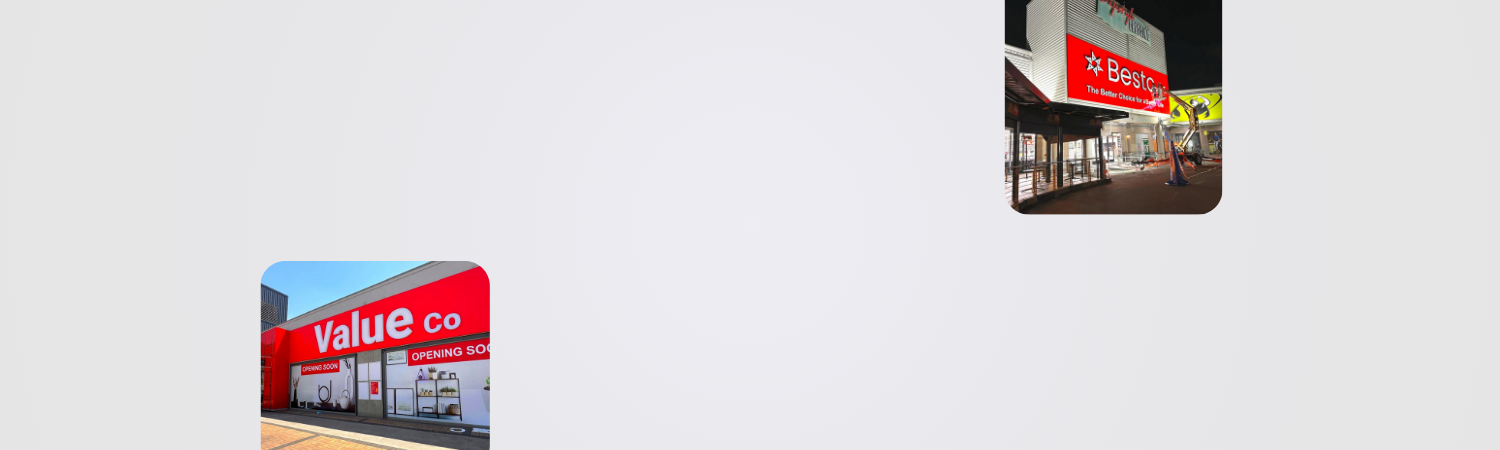

Identification signs tell people exactly who you are and where you’re located. These are usually the first signs customers notice when approaching your business.
Common examples include:
- Building signs
- Shopfront signs
- 3D fabricated lettering
- Channel letters
- Roof-mounted signs
- Pylon signs
The main purpose of identification signage is brand recognition. A strong, well-designed sign helps customers instantly recognize your business and builds trust before they even walk inside.

At Millennium Signs, identification signage is often produced using materials like acrylic, metal, perspex, or LED backlit elements to ensure high visibility both day and night. For businesses in busy Johannesburg areas, illuminated signs and bold 3D lettering can make all the difference in standing out from nearby competitors.
2. Informational Signs – Sharing Important Details

Informational signs communicate useful details to customers, staff, or visitors. These signs don’t sell directly—but they improve the overall customer experience.
Examples include:
- Office signage
- Reception signs
- Menu boards
- Safety and compliance signage
- Directional information boards
- Construction signage
The purpose of informational signage is clarity. Clear information reduces confusion, saves time, and creates a more professional environment. In workplaces and public areas, safety signage is also legally required and plays a critical role in compliance.
Millennium Signs manufactures high-quality informational signs using durable materials like vinyl, ACM boards, and photoluminescent finishes—ideal for offices, factories, malls, and business parks throughout Gauteng.
3. Directional Signs – Guiding People Where to Go

Directional signs help people move through a space easily and safely. They are especially important in larger properties, retail centres, hospitals, and office complexes.
Typical directional signage includes:
- Wayfinding signs
- Parking signs
- Floor and wall-mounted arrows
- Emergency exit signs
- Mall and building directories
The purpose of directional signage is flow and safety. When customers can navigate your space effortlessly, they’re more likely to have a positive experience—and stay longer.
Millennium Signs designs directional signage that blends seamlessly with your branding while remaining clear, readable, and compliant with safety regulations.
Why Understanding Signage Purpose Matters for Businesses

Knowing the purpose behind each type of sign helps you build a balanced signage strategy instead of relying on one solution alone. A successful business typically uses:
- Identification signs to attract attention
- Informational signs to communicate clearly
- Directional signs to guide movement
By combining all three, your signage works together to support brand visibility, customer experience, and operational efficiency.

With over three decades of hands-on experience, Millennium Signs helps businesses choose the right materials, sizes, and placements for maximum impact—whether it’s outdoor signage, digital billboards, or indoor office branding.
Need Help Choosing the Right Signs?

If you’re unsure which signage type best suits your business, Millennium Signs offers full-service support—from concept and design to manufacturing and professional installation. Our expert team works with architects, developers, retailers, and business owners across Johannesburg and South Africa.