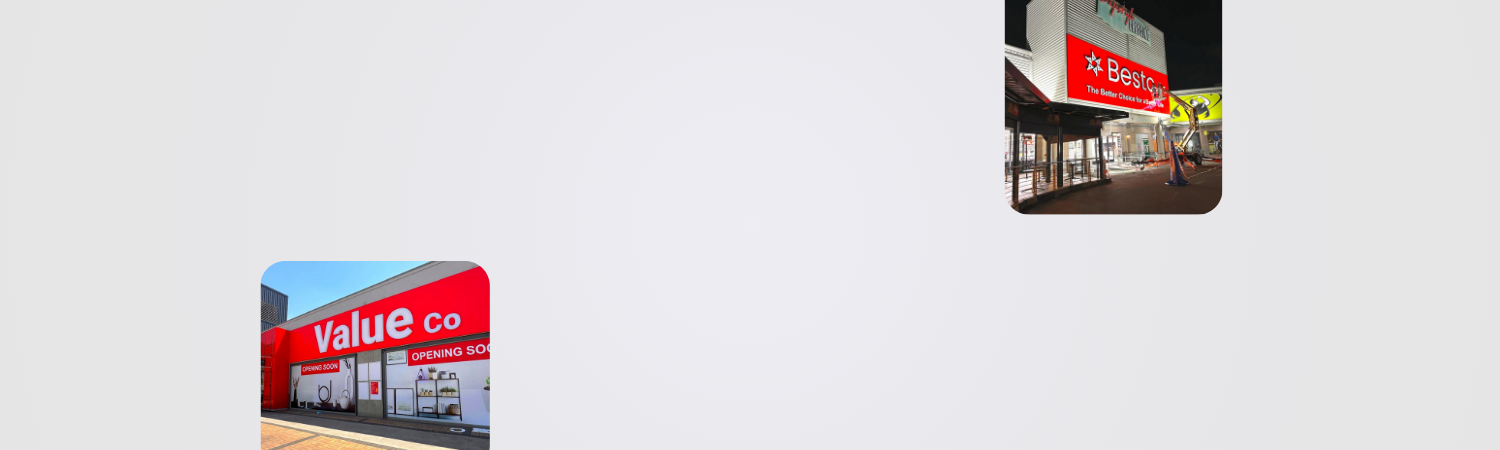

Have you ever wondered why some business signs instantly grab your attention while others fade into the background? The answer lies in psychology.
Effective signage is much more than a logo on a wall or a name above a shopfront. Great signage is carefully designed to capture attention, communicate information quickly, influence customer behaviour, and create lasting brand impressions.
Whether it's a large outdoor sign, a custom LED display, or a simple directional sign, understanding the psychology behind signage can help businesses create more effective marketing and branding strategies.
At Millennium Signs, we combine creative design with practical expertise to help businesses throughout Johannesburg and South Africa create signage that delivers real results.
How Does Signage Work?

Signage works by communicating visual information quickly and efficiently.
Unlike websites, brochures, or advertisements that require time to read, signs are often viewed for only a few seconds. During that short moment, the sign must:
- Capture attention
- Communicate a message
- Reinforce branding
- Encourage action
Effective signage simplifies information so that customers can understand it instantly.
The easier your sign is to process, the more likely it is to achieve its intended purpose.
The Science of First Impressions

Research consistently shows that people form first impressions within seconds.
For many businesses, signage is the first thing potential customers see. This means your signage often determines whether customers:
- Notice your business
- Trust your brand
- Enter your premises
- Engage with your products or services
Professional signage creates positive first impressions that encourage customer interaction and build credibility.
Why Visibility Matters

The human brain naturally notices objects that stand out from their surroundings.
This is why effective signage often uses:
- Bold colours
- Strong contrast
- Strategic lighting
- Large lettering
- Clear layouts
When signage is highly visible, it becomes easier for customers to notice and remember your business.
Poor visibility, on the other hand, reduces the effectiveness of even the most attractive sign.
The Role of Colour Psychology

Colours influence emotions, perceptions, and behaviour.
Different colours communicate different messages:
- Blue often represents trust and professionalism
- Red creates urgency and excitement
- Green is associated with growth and sustainability
- Black suggests sophistication and luxury
- Yellow attracts attention and conveys optimism
Choosing colours that align with your brand helps create stronger emotional connections with customers.
Effective signage uses colour strategically rather than simply making signs look attractive.
Simplicity Improves Communication

One of the biggest mistakes businesses make is overcrowding their signage.
The brain processes simple information much faster than complex information.
Good signage typically includes:
- A clear business name
- A concise message
- Easy-to-read fonts
- Strong visual hierarchy
When customers can understand your message immediately, your signage becomes more effective.
Less is often more when it comes to sign design.
How Signage Guides Customer Behaviour

Signage doesn't just communicate information—it influences decisions.
Businesses use signage to:
- Direct customer movement
- Highlight promotions
- Introduce products
- Encourage purchases
- Improve navigation
Retail stores, shopping centres, offices, and commercial buildings all use signage to shape customer experiences and guide behaviour in specific ways.
This is one reason directional signs and wayfinding systems are so effective.
Why Consistent Branding Matters

Customers trust brands they recognise.
Consistent signage helps reinforce your brand identity through:
- Colours
- Logos
- Typography
- Messaging
- Visual style
When customers repeatedly see the same visual elements across your building signs, office signage, window graphics, and promotional materials, brand recognition increases.
Strong brand recognition often leads to greater customer confidence and loyalty.
The Impact of Illuminated Signage

Light naturally attracts human attention.
This is why illuminated signs are among the most effective forms of signage available.
Benefits of illuminated signage include:
- Improved nighttime visibility
- Greater attention from passing traffic
- Enhanced brand presence
- Increased customer awareness
LED backlit signs, channel lettering, and lightbox signage allow businesses to remain visible long after the sun goes down.
What Makes Good Signage?

The most effective signage shares several common characteristics:
- Easy to read
- Visually appealing
- Consistent with the brand
- Highly visible
- Appropriate for its environment
- Professionally manufactured
- Strategically positioned
Good signage balances creativity with clarity to ensure customers quickly understand the intended message.
Common Signage Mistakes to Avoid

Even attractive signage can fail if key design principles are ignored.
Common mistakes include:
- Using too much text
- Choosing difficult-to-read fonts
- Poor colour contrast
- Inadequate lighting
- Small lettering
- Inconsistent branding
- Poor placement
Avoiding these issues significantly improves the effectiveness of your signage investment.
How Millennium Signs Creates Effective Signage

At Millennium Signs, we understand that successful signage requires more than quality materials.
Our team considers:
- Visibility
- Brand identity
- Customer behaviour
- Environmental factors
- Viewing distances
- Installation locations
By combining strategic design with expert manufacturing and installation, we create signage solutions that attract attention, communicate clearly, and support business growth.
Final Thoughts
The psychology behind effective signage is rooted in visibility, simplicity, branding, and human behaviour. Great signage captures attention, communicates information quickly, and influences customer decisions in subtle but powerful ways.
Whether you're investing in outdoor signs, office signage, illuminated displays, or directional signage, understanding how signage works can help you make smarter decisions that improve visibility, strengthen branding, and attract more customers.
When designed correctly, signage becomes one of the most powerful marketing tools your business can own.