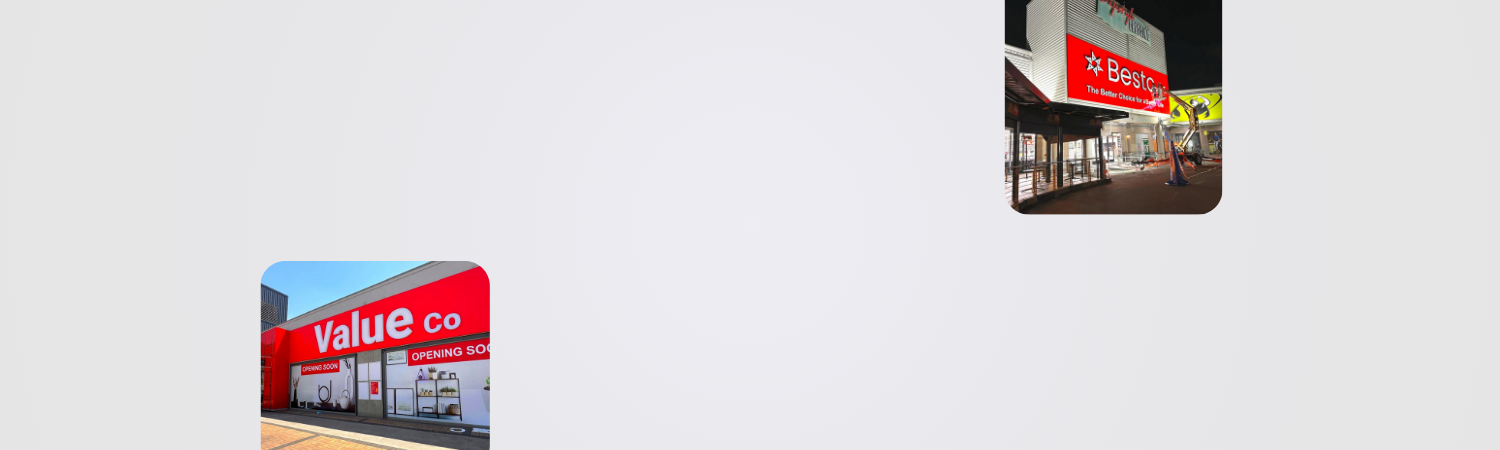
When it comes to signage, design is only half the battle. Placement is what determines whether people actually see it—and act on it. At Millennium Signs, we often tell clients that even the best-designed sign can underperform if it’s not positioned correctly.
Here’s how to get it right.
1. Prioritise Visibility from the Road
Your outdoor signage should be instantly visible to passing traffic. This means:
- Positioning signs at natural eye level or slightly above
- Avoiding obstructions like trees, poles, or parked vehicles
- Ensuring readable fonts from a distance
Building signs and shopfront signage should “face” the main flow of traffic, not sit at awkward angles.
2. Think Like a First-Time Visitor
Ask yourself: “If I’ve never been here before, would I know where to go?”
That’s where directional signs come in. In office parks, malls, and large complexes, signage should guide people step-by-step:
- Entrance signage
- Parking direction boards
- Reception or reception-level indicators
Clear navigation reduces confusion and improves customer experience.
3. Use Entrances as Prime Real Estate
Entrances are high-impact zones. Place signage:
- Above main doors (fascia signage)
- Beside entry points at eye level
- Along walkways leading to the entrance
This ensures people see your brand at the exact moment they’re deciding to enter.
4. Maximise Height Without Losing Readability
Higher placement increases visibility from a distance, especially for roadside signage and pylon signs. But balance is key—too high and people won’t read it.
Ideal signage placement is:
- High enough to be seen over cars and crowds
- Low enough to remain legible and readable quickly
5. Lighting Matters More Than You Think
Even the best-placed sign loses impact at night without proper lighting. Consider:
- LED backlit signage
- Lightbox signs
- External spotlights for building signs
This ensures 24/7 visibility and brand presence.
6. Match Placement to Purpose
Different signage types need different placement strategies:
- Outdoor signage → roadside, building facades
- Directional signs → walkways, intersections, parking zones
- Retail signage → shopfront windows and entrances
Final Thought
Great signage placement is about visibility, timing, and customer flow. When done right, it doesn’t just display your brand—it actively drives foot traffic and increases engagement.